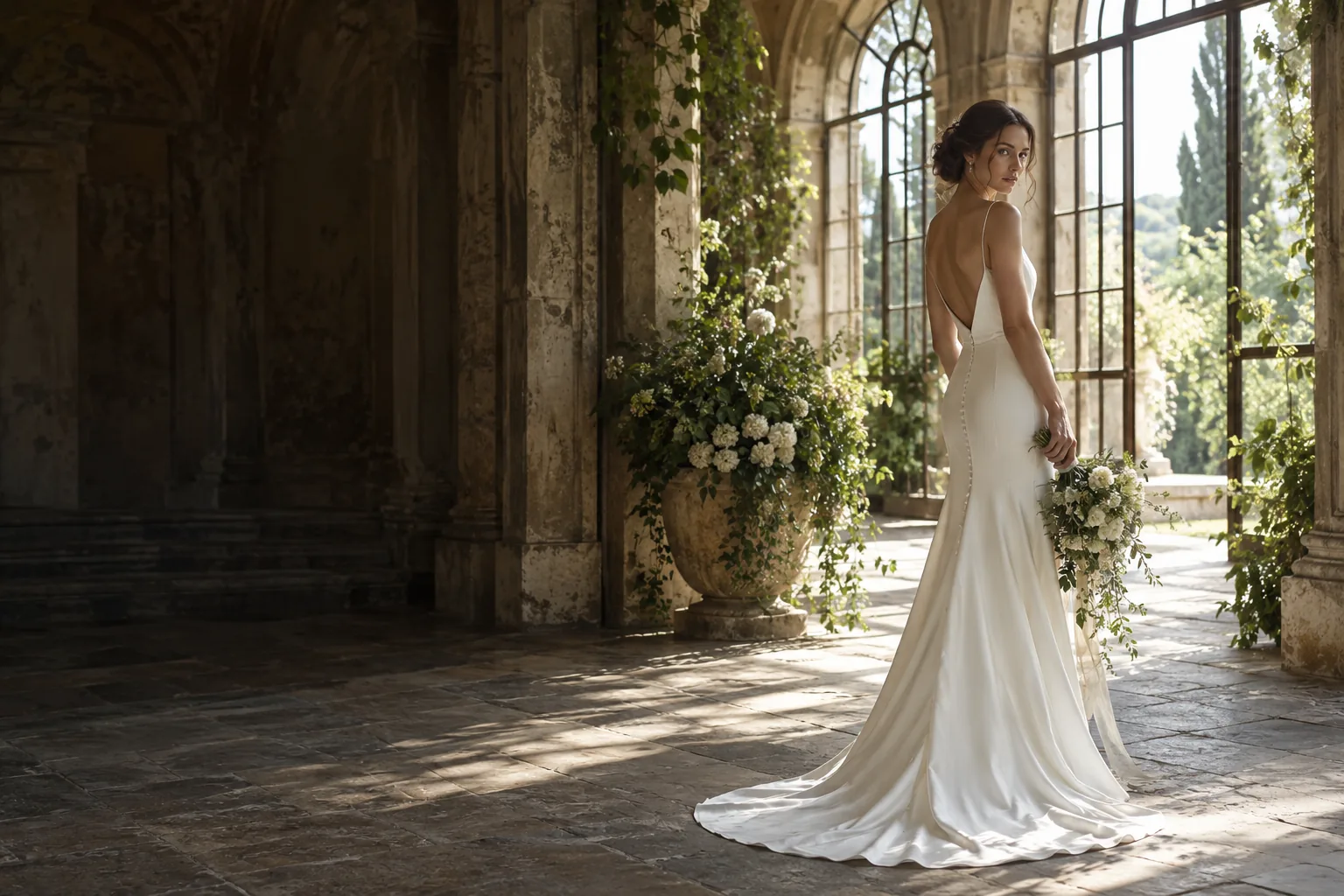
For the dress, the day, and all the details between.
Bridal style with room for real life. Ideas for what to wear, what to ask, and how to make the day feel like yours.
Beauty is in the considered details.
There is the photograph of the dress. Then there is the moment you sit down in it, cross the garden, greet an old friend, and remember where you left your shoes. We think both sides belong in the same conversation. Elizabeth James Bridal brings visual inspiration together with the useful questions that make it work in a real place, on a real day.
Here you will find a considered edit of silhouettes, fabrics, veils, and the small decisions that finish a look. You will also find help with the parts of wedding planning that rarely appear in an inspiration board: directions, travel, venue access, guest notes, packing, and the timing of a day that moves fast. Start where you are. A single good question can make the next decision easier.
We write for couples shaping a celebration of any size, wedding party members helping behind the scenes, and guests who want to show up thoughtfully. We favor practical detail over rigid rules. An intimate city hall ceremony and a large country wedding may look different, but both deserve careful planning that leaves people free to be present.
Stories for the decisions ahead.
Begin with the question on your mind today. Each guide gives you something to compare, ask, try, or send.
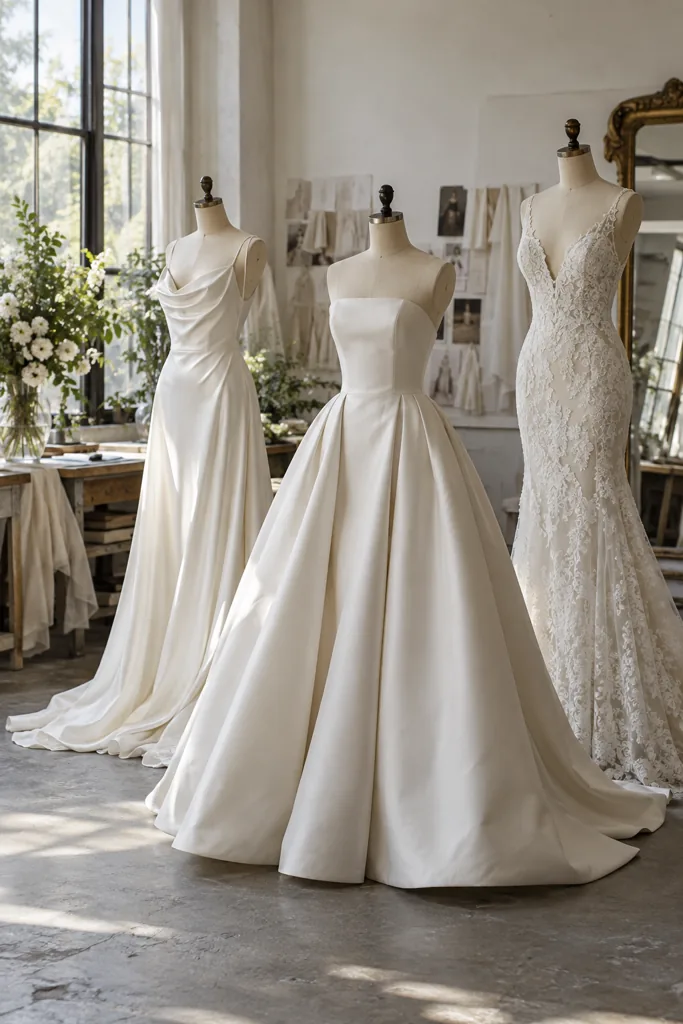 Bridal Style
Choosing a Wedding Dress Silhouette for Your Venue
Find a wedding dress shape that works with your setting, movement, and comfort. Compare silhouettes for gardens, ballrooms, beaches, and intimate venues.
Read the story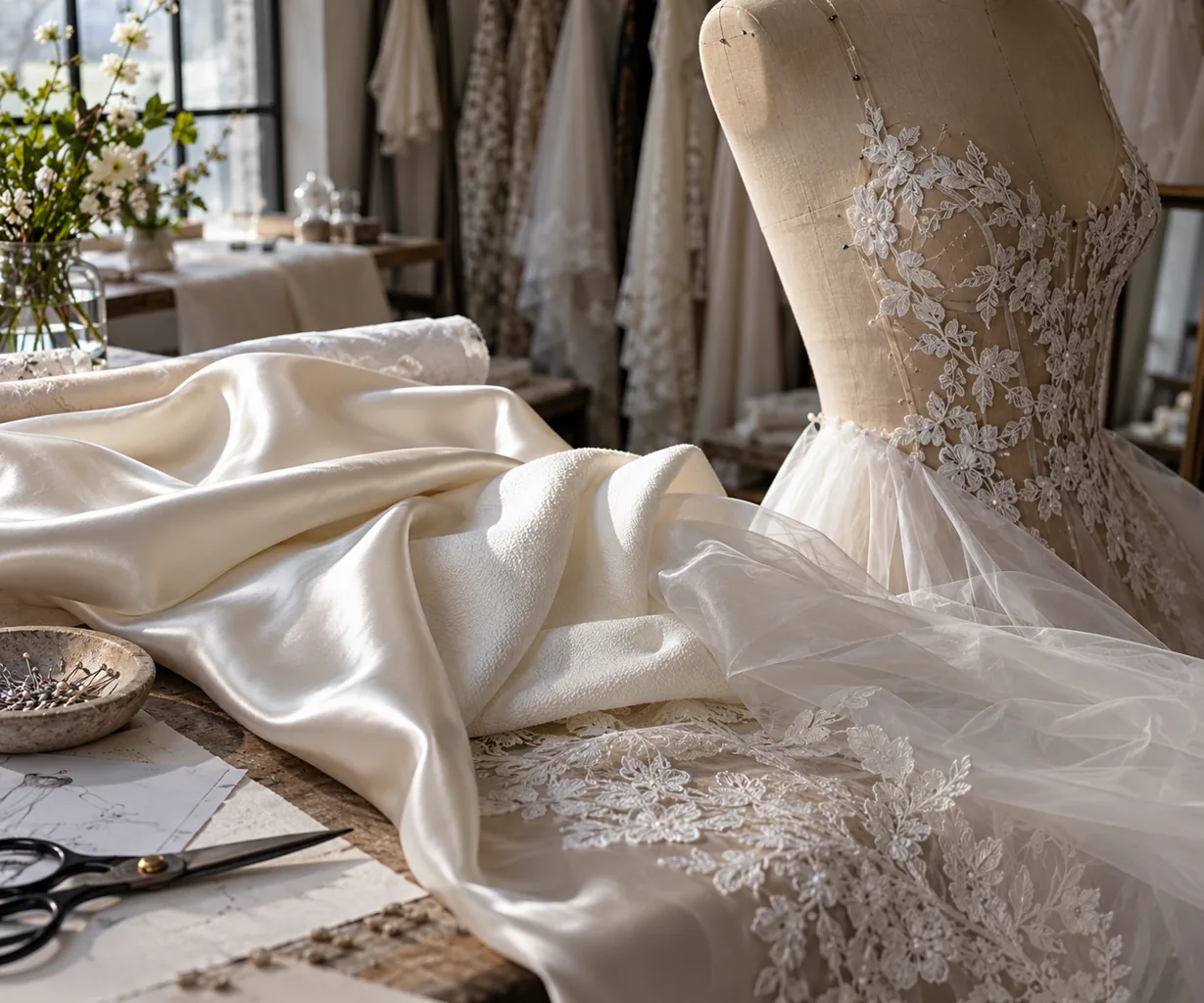 Dress Details
Wedding Dress Fabrics for Every Season
Compare wedding dress fabrics by drape, structure, weather, and care so you can choose a material that looks and feels right for your celebration.
Read the story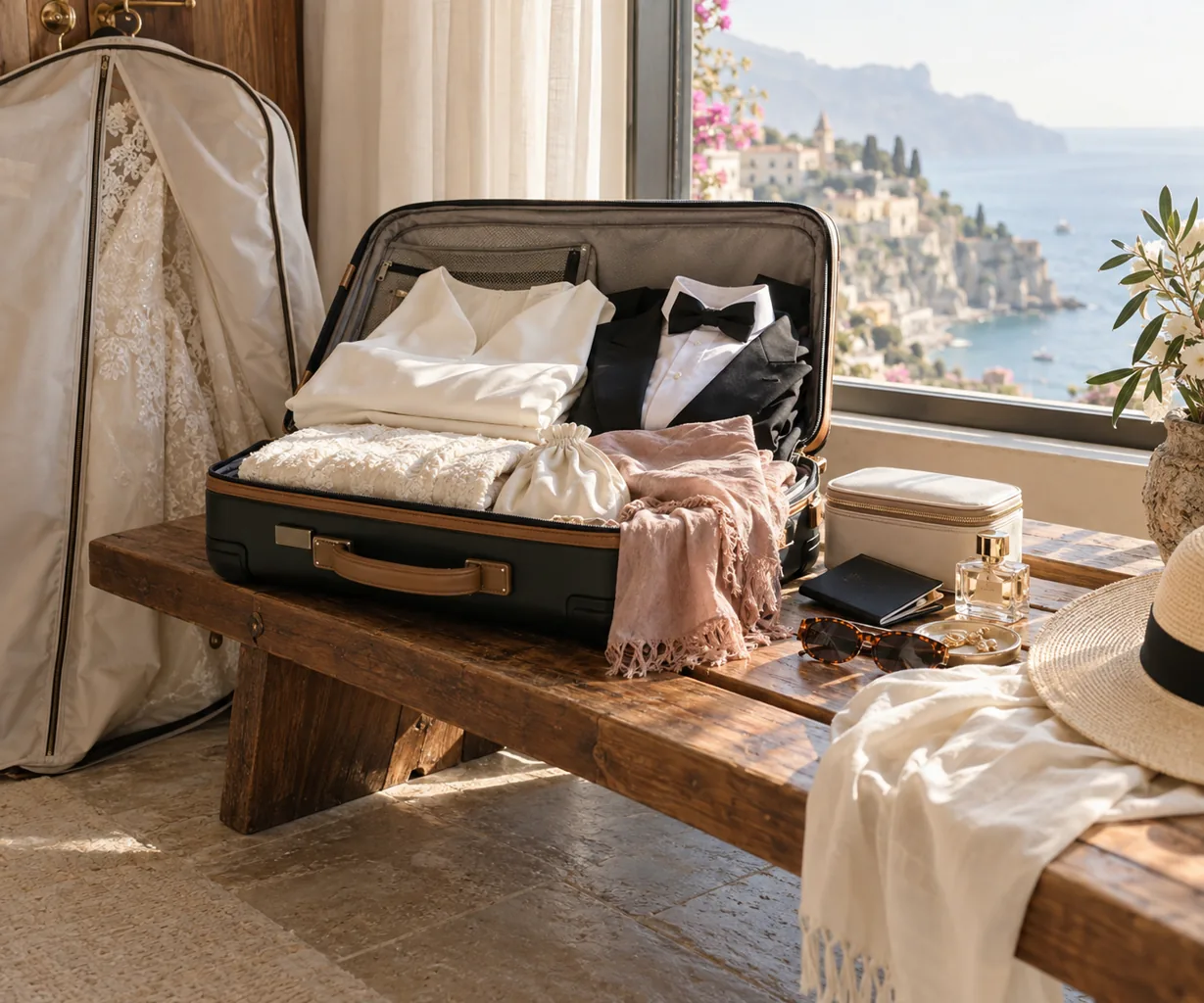 Travel & Packing
What to Pack for a Destination Wedding Weekend
A practical packing plan for wedding attire, documents, accessories, and last-minute repairs, including how to keep essentials close while flying.
Read the story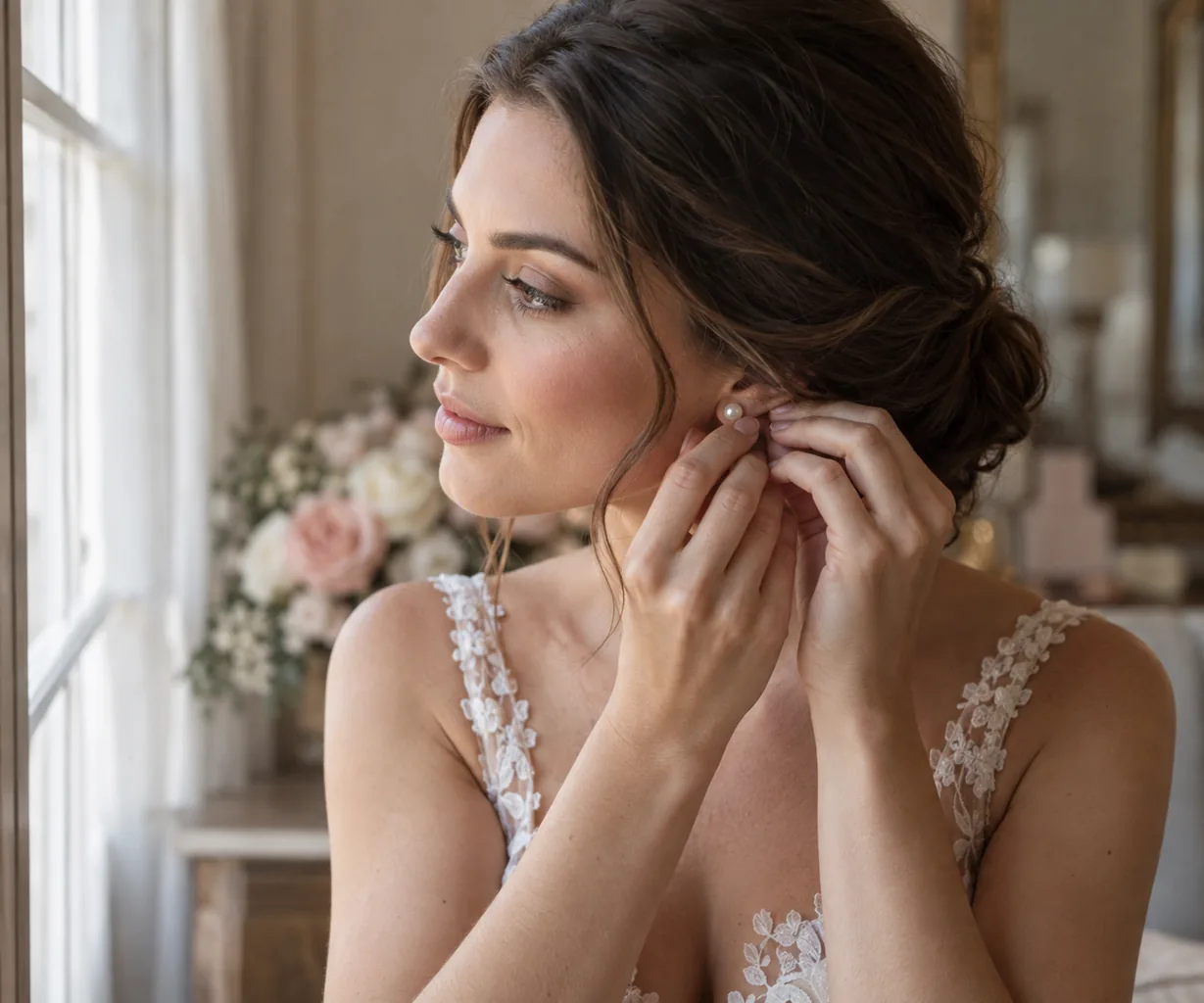 01 / THE PERSONAL EDIT
A dress makes sense when it makes sense on you.
Start with the shape, then notice the conditions around it. A fitted column can be a quiet counterpoint to an ornate ballroom. A full skirt can bring wonderful scale to a simple courtyard. Neither choice is dictated by the venue; both require a thoughtful plan for movement, comfort, and fabric.
At a fitting, ask to sit, walk, and lift your arms. Bring shoes close to the height you expect to wear. Look at photos taken from across the room as well as close to the mirror. A silhouette has to feel good during a long dinner, a narrow staircase, and a dance—not only while still.
Fabric changes the entire experience. Crepe can bring a clean line; organza gives airy structure; lace can add texture without needing more jewelry. Yet the lining, weight, and layers are as important as the name on the tag. Ask what the dress is made of all the way through, and feel how it sits after several minutes.
Finish with an edit of accessories. Try the veil over the actual gown, then step back. Consider one focal point rather than adding every piece that catches your eye. A change of shoes or a jacket can be enough to shift the look at night. If you love a sentimental item, let it lead the styling rather than treating it as an afterthought.
Consider the finishing pieces ↗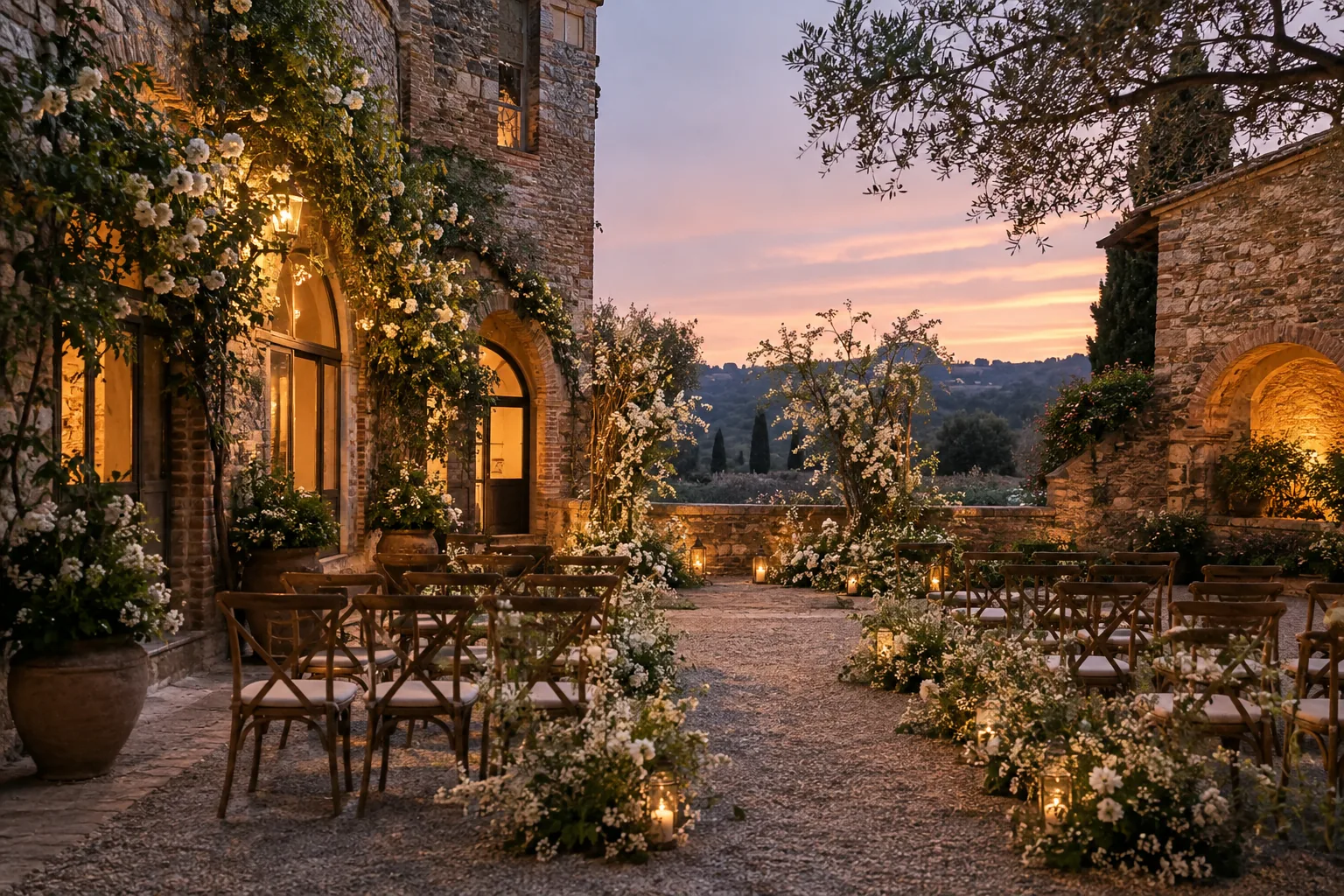
Plan the moments around the moment.
The best wedding plan gives each person the information they need, at the time they need it. Confirm the correct entrance before sharing a venue address. Ask about parking before promising guests a space. Tell travelers which items are essential enough to keep close. These are modest acts of hospitality that make a noticeable difference.
For a destination celebration, organize clothing by event and protect the ceremony outfit first. Formalwear can be awkward on a plane, and storage rules depend on your carrier and aircraft. Check those details ahead of travel, leave room for a garment bag, and make a plan for hanging or pressing the dress on arrival.
For a large venue, ask which entrance your event uses and whether the day has special security or bag restrictions. Confirm step-free routes and drop-off points directly. When instructions change, have one person send one clear update. Guests cannot follow a plan they never received.
A venue arrival note might take only four lines, yet it can spare dozens of individual questions. Make it readable on a phone. Put the address, arrival window, entrance, and contact in that order. Our arrival checklist
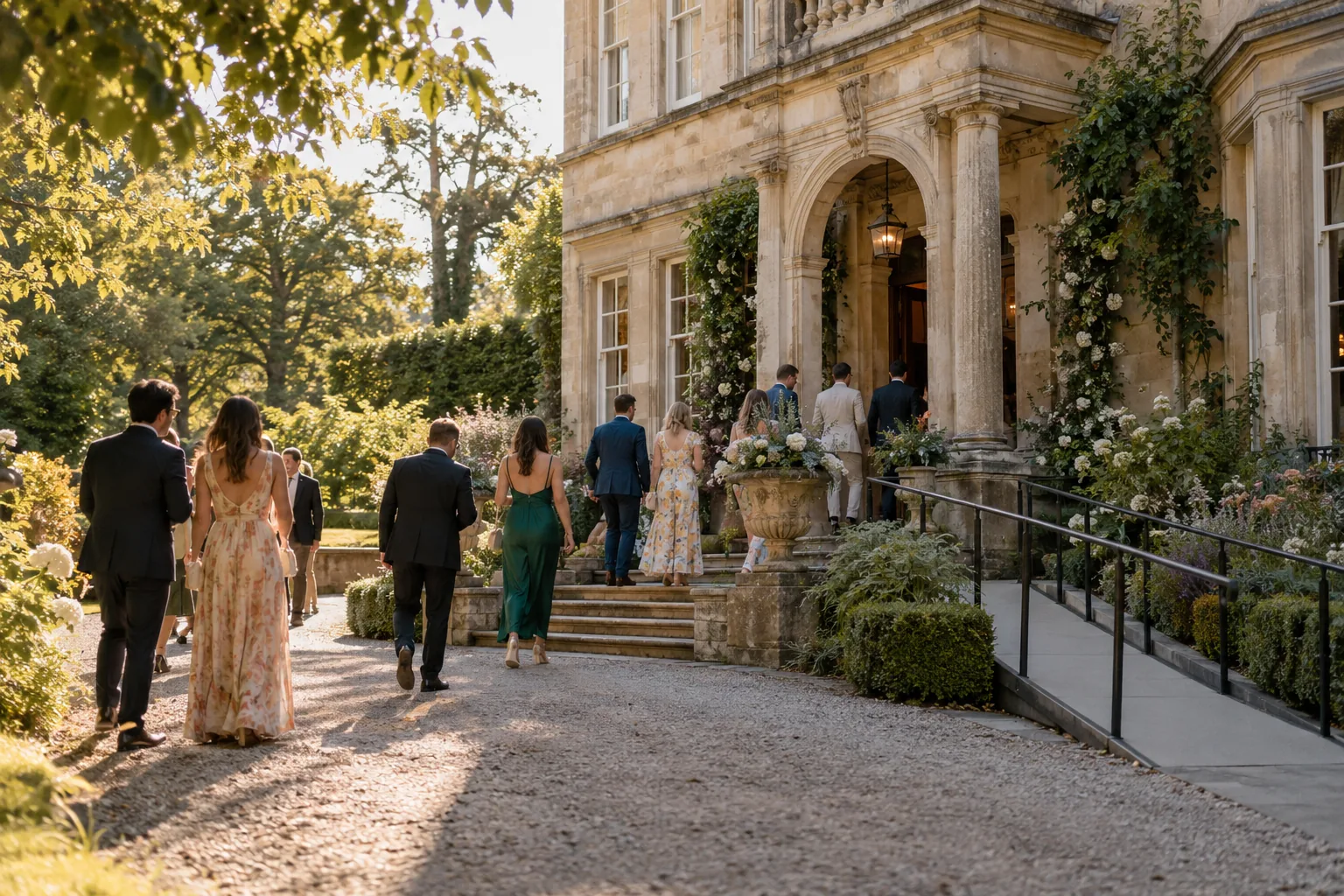
Care for your guests is often an address, a clear arrival time, and a path they can actually find.
A gentle timeline for the practical things.
Use these moments as checkpoints, then adapt to your actual date, vendor timelines, and local requirements.
Set the shape
Choose a venue and sketch a guest count. Note weather, terrain, travel, accessibility, and the ceremony route before narrowing dress ideas. Ask salons about order and alteration timelines.
Make it tangible
Bring venue images to fittings. Decide whether a train, layer, or second pair of shoes needs planning. Gather lodging and transportation information for guests coming from out of town.
Test the details
Confirm the guest entrance, parking, and access route. Try all accessories with the dress. Draft directions and assign one contact for practical questions.
Confirm, then rest
Check venue instructions, weather options, and travel. Pack a small repair kit, share one final guest note, and teach a trusted person the bustle or tricky fastenings.
Leave space
Keep rings, documents, and the day's contact list together. Dress with enough time for a comfortable pace. Let someone else handle ordinary arrival questions.
There is no need to sound like everyone else.
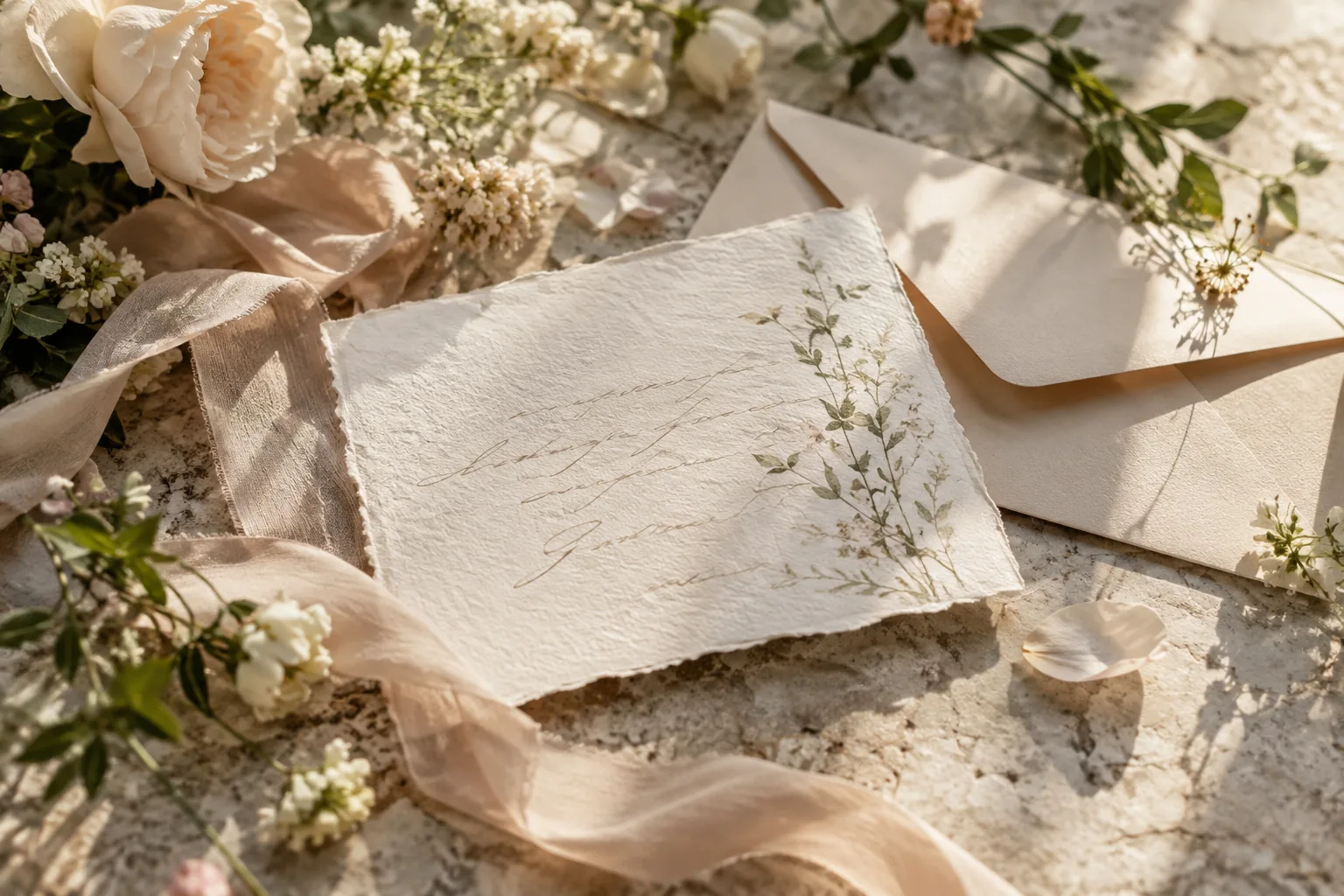
Invitations give people information and a sense of the celebration to come. Keep the essentials easy to find: what is happening, where, when, what to wear if that matters, and how to reply. Put complicated arrival details on a separate page or note rather than squeezing them into small print.
Bridal-party communication benefits from the same simplicity. Tell people what you hope they can help with, which expenses or travel commitments are involved, and when you need an answer. A kind question is better than an assumption about their time or budget. Guests, too, appreciate a clear contact when the couple is busy.
Thank-you notes and wedding cards do not need a grand phrase. Name the person, notice something specific, and write one honest wish. Our wedding card wording guide
When plans change, speak plainly. One updated arrival note with a timestamp is kinder than scattered messages that leave people guessing. A warm tone and accurate details can comfortably live together. Before sending anything, have one person who has never seen the venue read it aloud. They will catch the missing gate name or unspoken assumption that people close to the planning process no longer notice.
Find your words ↗We begin with the question a reader can actually use.
We approach bridal content as an editorial notebook: look closely at how a choice will feel, move, and work on the day. When information depends on a venue, airline, or vendor, we point readers back to the current primary source. We do not assume one style of wedding or one version of bridal beauty. Our aim is to make the next conversation—with a tailor, venue, friend, or partner—more useful.
How our guides are made ↗Help everyone arrive with ease.
Useful preparation is specific to the event. Verify these details with your venue and share only what is current.
Arrival
Confirm which entrance guests use, when doors open, and where drivers can safely stop. A parking plan should name the actual lot or reservation process, not simply promise “parking available.”
Access
Ask for step-free routes from drop-off and parking to the ceremony, reception, and restrooms. Make it easy for guests to tell your designated contact what they need without explaining it publicly.
Entry
For stadium, arena, or event-center weddings, check event-specific bag and security rules. Confirm who can bring necessary medical items and how the venue handles exceptions.
Travel
For overnight guests, state the practical distance from lodging to the venue, shuttle times if confirmed, and an alternative if plans change. Keep the important details in one easy-to-open note.
Latest stories.
Six starting points for the most tactile and practical parts of wedding planning.
Bridal StyleChoosing a Wedding Dress Silhouette for Your Venue
Find a wedding dress shape that works with your setting, movement, and comfort. Compare silhouettes for gardens, ballrooms, beaches, and intimate venues.
Read the storyDress DetailsWedding Dress Fabrics for Every Season
Compare wedding dress fabrics by drape, structure, weather, and care so you can choose a material that looks and feels right for your celebration.
Read the storyTravel & PackingWhat to Pack for a Destination Wedding Weekend
A practical packing plan for wedding attire, documents, accessories, and last-minute repairs, including how to keep essentials close while flying.
Read the storyPlanning NotesWedding Venue Arrival Checklist for Couples and Guests
Plan parking, arrival windows, access needs, entry rules, and weather contingencies with a clear venue-day checklist for couples and guests.
Read the story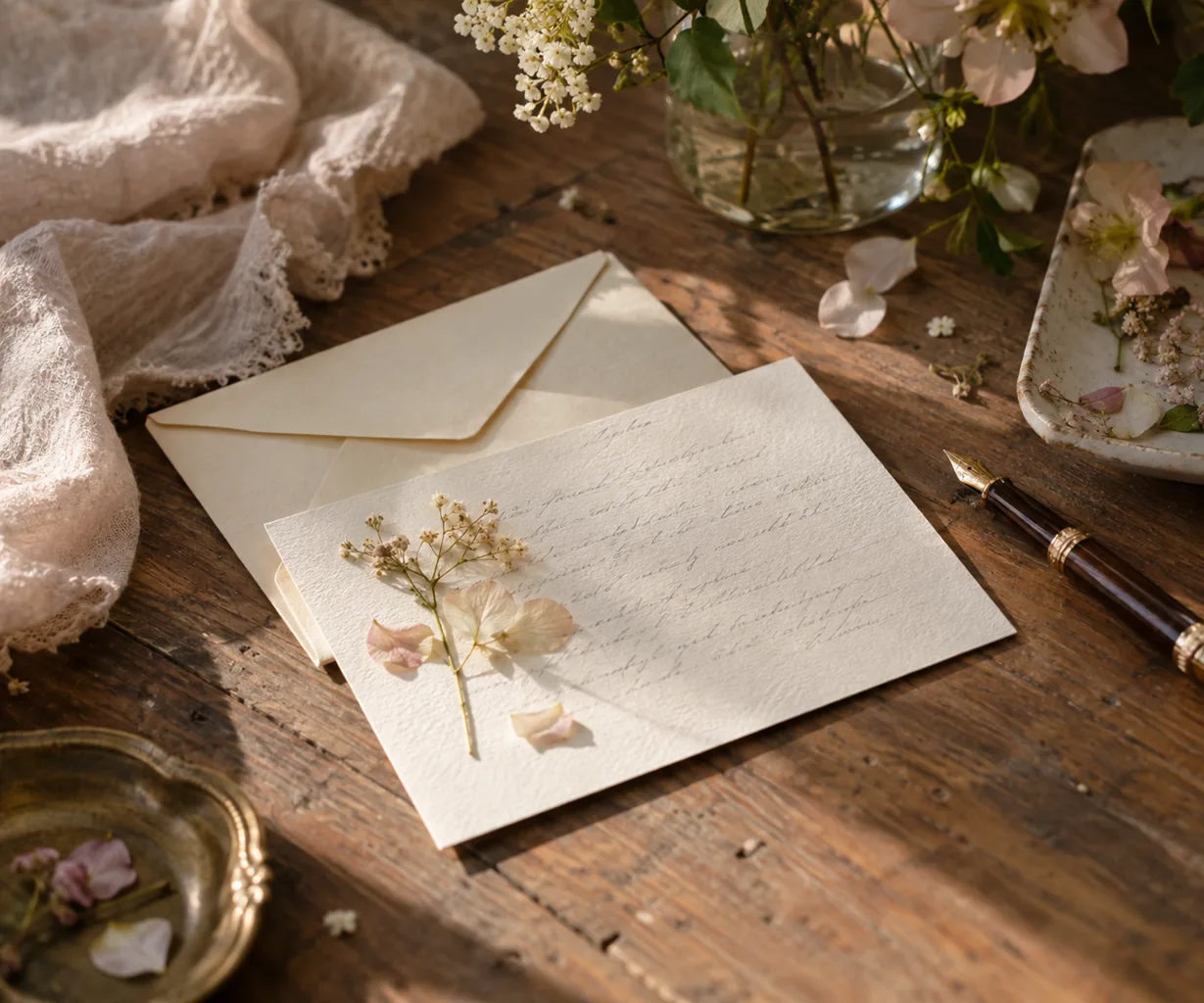 Wedding Etiquette
What to Write in a Wedding Card That Sounds Like You
Use a simple, personal formula and adaptable examples to write wedding wishes for close friends, family, coworkers, and couples you know less well.
Read the story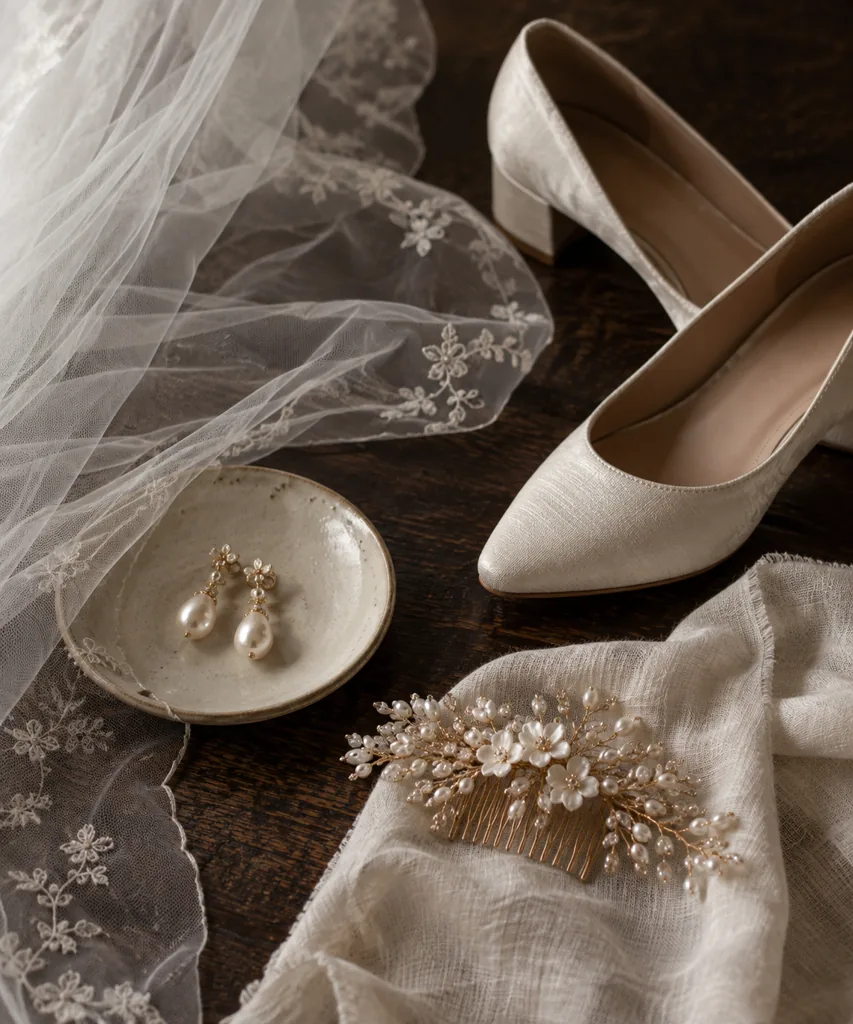 The Finishing Edit
Bridal Accessories That Change the Whole Look
See how veils, jewelry, shoes, hair details, and layers shape a bridal look, with practical ways to balance them around your dress and venue.
Read the storyA few useful answers.
Good planning usually begins with a question that sounds almost too small to ask. Ask it anyway: the detail that seems minor now may shape how comfortable and welcome everyone feels later.
How early should I start looking for a wedding dress?
Start by checking lead times with the salons or designers you want to visit. Ordering and alterations can take months, and made-to-order schedules vary. If your date is close, ask about available samples, ready-to-wear options, and realistic alteration appointments.
Does my dress have to match the venue style?
No. Think about the venue's physical conditions—ground, stairs, temperature, and space—then choose the visual contrast or harmony you like. Plan for movement and care instead of following a style rule.
What should guests know before arriving at a wedding venue?
Share the correct entrance, arrival window, parking or transit details, access route, event-specific entry rules, and one contact for changes. Verify these details with the venue before sending them.
How can I travel with a wedding dress?
Ask the dress maker about packing and your airline about carry-on size and onboard storage. TSA provides screening guidance for wedding dresses, but the airline determines its own stowing arrangements.
Do I need a veil and a second pair of shoes?
Neither is required. Try the veil with your actual dress and hairstyle. Choose shoes that suit the venue surface and your comfort; if you change pairs, check that the hem still works.
What belongs in a wedding-day emergency kit?
Keep it small and specific to your outfit: spare fasteners, fashion tape, suitable stain supplies, blister care, hairpins, and the directions for any tricky bustle. Ask the salon about fabric-safe products.
How do I write a wedding card for someone I don't know well?
Keep it warm and proportionate: congratulate the couple, refer to one genuine connection if you have one, and offer a simple wish. Avoid invented intimacy or generic borrowed passages.
Three questions to bring to the next conversation.
With the salon
What is the dress made of beneath the visible layer? How will it move when I sit and walk? What alterations are realistically possible, and what must remain as designed? These answers help distinguish a fitting-room favorite from a dress you will love to wear all day.
With the venue
Where will each guest arrive, and what happens between the curb and the ceremony? Confirm the exact entrance, access route, parking, weather plan, and the person who can answer a question on the day.
With each other
Which parts of the day matter most to us? Where do we want to spend attention, time, and money? A shared answer is more helpful than a growing list of things weddings are supposed to include.